Research Highlights
Between 2017 and 2024, 350 Exciton Science researchers published 700 peer-reviewed scientific papers which have accumulated tens of thousands of citations. These publications and their reach through the scientific and technology community showcase the importance of our research, from the fundamental theory and computer models of excitonic systems right through to commercially ready excitonic sensors, solar cells, LEDs and security features.
Excitonic Systems for Solar Energy Conversion
Platform 1.1 – Excitonic Light Management
Platform Champion: Professor Timothy Schmidt
Deputy Platform Champion: Associate Professor Wallace Wong
Outcome summary
The goal of this platform was to control both the energy and spatial dimension of light to subsequently tame the solar spectrum, allowing researchers to surpass the 34% Shockley-Queisser efficiency limit for light-to-electricity conversion. Researchers first explored photochemical upconversion, converting low-energy photons into higher-energy ones, and luminescent solar concentration, which increase light energy density by concentrating it from a large area to a small one via waveguiding. This work enabled significant achievements, including successful upconversion from below the silicon bandgap, paving the way for improved performance in widely used photovoltaic technology. The team achieved 40% of the maximum possible upconversion efficiency in solid-state-sensitized systems and reported benchmark performance for large-area luminescent solar concentrators through novel materials engineering. These advances led to industry collaborations with companies like ClearVue PV and Dulux Group, accelerating the translation of this research into practical applications.
Research Highlights
- “Energy Transfer between CdZnS Quantum Dots and Perylene Diimide Dyes”, N. Wu, N. Kirkwood, N. Saker Neto, R. Pervin, P. Mulvaney, W. W. H. Wong; The Journal of Physical Chemistry C 127 (20), 11567–11575 (2023).
- “Medium Effects on the Fluorescence of Imide-Substituted Naphthalene Diimides”, R. Pervin, A. Manian, Z. Chen, A. J. Christofferson, T. C. Owyong, S. J. Bradley, J. M. White, K. P. Ghiggino, S. P. Russo, W. W. H. Wong; Journal of Photochemistry and Photobiology A: Chemistry 436, 114364 (2023).
Platform 1.2 – Solution-Processed Next Generation Photovoltaics
Platform Champion: Professor Jacek Jasieniak
Deputy Platform Champion: Professor Udo Bach
Outcome summary
Platform 1.2 transformed the landscape of solar energy by developing next-generation, solution-processed photovoltaic materials that could surpass the performance of conventional silicon-based technologies. By focusing on perovskite and other emerging materials such as CZTS, the platform achieved higher efficiencies and greater versatility in solar cells. Notable achievements included world-record efficiencies for both back-contact and fully-printed perovskite solar cells, as well as advancements in perovskite solar windows with unprecedented stability, demonstrating the potential for these materials in both traditional and new applications.
In addition to solar power, Platform 1.2 expanded the scope of perovskite technology into X-ray detection, revealing promising applications in medical and industrial imaging. The platform also advanced the development of a high-throughput materials discovery system, combining AI and combinatorial sputtering to accelerate the identification of new photovoltaic materials. These innovations have contributed to the broader goal of making solar energy more efficient, flexible, and accessible across various industries and applications.
Research Highlights
- “Chloride-Based Additive Engineering for Efficient and Stable Wide-Bandgap Perovskite Solar Cells”, X. Shen, B. M. Gallant, P. Holzhey, J. A. Smith, K. A. Elmestekawy, Z. Yuan, M. Bernardi, A. Dasgupta, E. Kasparavicius, T. Malinauskas, P. Caprioglio, O. Shargaieva, Y. H. Lin, M. M. McCarthy, E. Unger, V. Getautis, A. Widmer-Cooper, L. M. Herz, H. J. Snaith; Advanced Materials 35 (30), 2211742 (2023).
- “Thermal Disorder-Induced Strain and Carrier Localization Activate Reverse Halide Segregation”, N. Mussakhanuly, A. M. Soufiani, S. Bernardi, J. Gan, S. K. Bhattacharyya, R. L. Chin, H. Muhammad, M. Dubajic, A. Gentle, W. Chen, M. Zhang, M. P. Nielsen, S. Huang, J. Asbury, A. Widmer-Cooper, J. S. Yun, X. Hao; Advanced Materials 36 (11), 2311458 (2024).
- “CuSCN Modified Back Contacts for High Performance CZTSSe Solar Cells”, Y. Ji, W. Chen, D. Yan, J. Bullock, Y. Xu, Z. Su, W. Yang, J. S. Laird, T. Zheng, N. Wu, W. Zha, Q. Luo, C.-Q. Ma, T. A. Smith, F. Liu, P. Mulvaney; Advanced Functional Materials 33 (7), 2211421 (2023).
- “An ITO-Free Kesterite Solar Cell”, Y. Ji, W. Chen, D. Yan, J. Bullock, Y. Xu, Z. Su, W. Yang, J. S. Laird, T. Zheng, N. Wu, W. Zha, Q. Luo, C.-Q. Ma, T. A. Smith, F. Liu, P. Mulvaney; Small 20 (12), 2307242 (2024).
Control of Excitons
Platform 2.1 – Coherent Control of Excitons
Platform Champion: Professor Dane McCamey
Deputy Platform Champion: Professor Trevor Smith
Outcome summary
Platform 2.1 focused on the precise control over exciton behaviour, including spin manipulation and optical polarization. The aim was to unlock new pathways for enhancing solar energy conversion and advancing quantum technologies by controlling how excitons migrate, interact, and undergo processes like singlet exciton fission. This research is critical for surpassing the Shockley–Queisser limit of photovoltaic efficiency by enabling the generation of multiple excitons from a single photon, thus improving energy conversion.
Key achievements included the development of a femtosecond laser system at the University of Melbourne, designed to precisely control exciton dynamics and facilitate exciton logic studies. The platform also pioneered techniques such as spatially resolved electroluminescence, photoluminescence, and electrically detected magnetic resonance, providing deeper insights into ultrafast excitonic processes. The concept of exciton logic moved forward with the demonstration of a rudimentary exciton logic gate based on multiphoton absorption. Additionally, a roadmap for exciton-based logic devices was outlined, with conceptualization of an excitonic AND gate and significant advancements in spin-based magnetic field imaging. These outcomes have set the stage for the commercialization of exciton-based technologies, with ongoing efforts to bring devices to market.
Research Highlights
- “A Framework for Multiexcitonic Logic”, R. J. Hudson, T. S. C. MacDonald, J. H. Cole, T. W. Schmidt, T. A. Smith, D. R. McCamey; Nature Reviews Chemistry 8 (2), 136–151 (2024).
- “Quantifying the Relaxation Dynamics of Higher Electronic Excited States in Perylene”, R. J. Hudson, T. S. C. MacDonald, J. H. Cole, T. W. Schmidt, T. A. Smith, D. R. McCamey; The Journal of Physical Chemistry C 127 (8), 4215–4223 (2023).
- “Inter-Excited State Photophysics I: Benchmarking Density Functionals for Computing Non-Adiabatic Couplings and Internal Conversion Rate Constants”, A. Manian, S. Patel, D. Rajagopal, R. Suresh; The Journal of Chemical Theory and Computation 19 (1), 271–292 (2023).
Platform 2.2 – Excitons at Interfaces
Platform Champion: Associate Professor Asaph Widmer-Cooper
Deputy Platform Champion: Dr Alison Funston
Outcome summary
Constructing a device from a single photoactive molecule is the “Holy Grail” in the miniaturisation of molecular electronics. Similarly, constructing a functional nanostructure able to do useful work remains a goal in nanoscience assembly. These have remained a distant dream due to difficulties in understanding the fundamental nature of the exciton and controlling its dynamics across organic-inorganic hybrid interfaces. Exciton dynamics across hybrid interfaces is highly complex and is dependent on molecular parameters that directly impact the nanoscale morphology, spin polarisation, exciton manifold and interfacial density of states. These parameters are well below the diffraction limit of light and not observable through conventional bulk spectroscopic and imaging techniques.
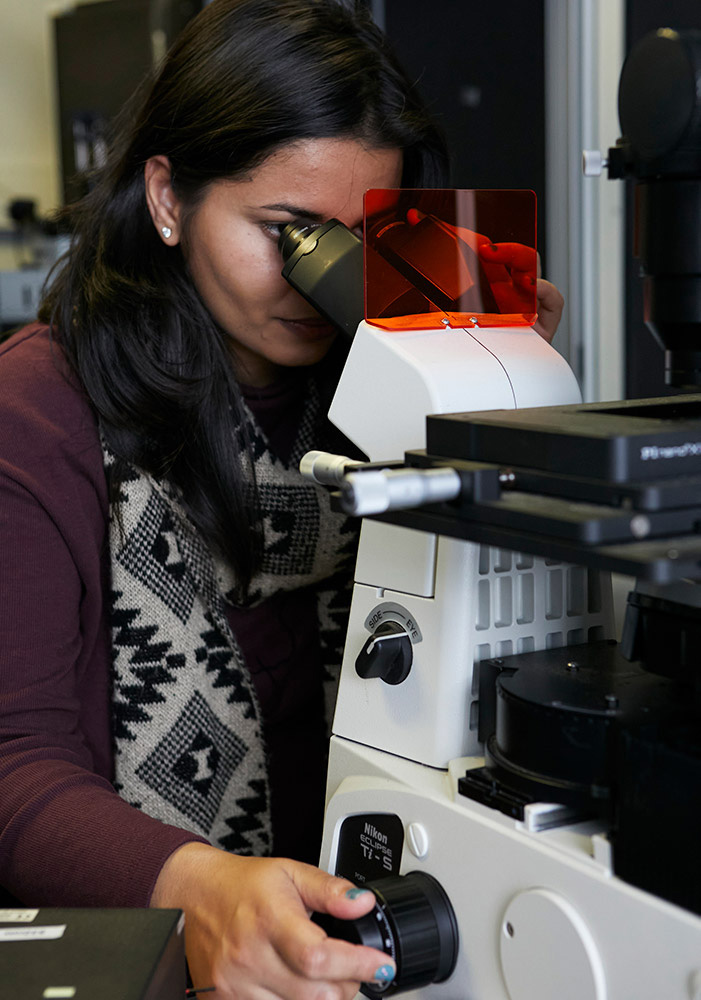
Platform 3.2 was focused on the development and application of novel methods for understanding and controlling the behaviour of excitons at interfaces. This included the development of novel optical probes of exciton behaviour, including super-resolution, time-resolved emission, and transient absorption optical microscopy setups, the design and construction of interfaces to control the localization and lifetime of excitons, optimizing interfaces via band-edge engineering and passivation, and constructing single molecule devices and functional nanostructures.
The Centre developed a suite of nanocrystal assembly methods that allow different types of nanoparticles to be ordered and co-ordered into structures with a wide variety of geometries and properties, including over macroscopic areas – and theory to understand energy transfer across hybrid organic-inorganic and inorganic-inorganic interfaces, including the roles of nanoscale morphology and spin – and applied these to explain exciton dynamics in systems including QD-QD and QD-AuNP clusters, QD/dye, Si/tetracene and bulk PV interfaces, metal halide perovskite films and quantum wells.
This has led to continuing multi-CI-PI projects, including an International Research Training Group formed between the University of Melbourne, Monash University and the University of Bayreuth, which will utilise findings from this platform to construct optical logic gates using regular arrays of addressable device elements with the ability to undergo photoswitching.
Research Highlights
- “Colloidal Stability of Apolar Nanoparticles: The Role of Particle Size and Ligand Shell Structure”, T. Kister, D. Monego, P. Mulvaney, A. Widmer-Cooper, T. Kraus; ACS Nano 12 (5), 4972–4980 (2018).
- “Scalable and Consistent Fabrication of Plasmonic Colors via Nanoimprint Lithography”, M. F. S. Shahidan, J. Song, T. D. James, P. Mulvaney, A. Roberts; SPIE Micro+ Nano Materials, Devices, and Applications 11201, 98–99 (2019).
Platform 2.3 – Multiscale models of exciton transport
Platform Champion: Professor Jared Cole
Deputy Platform Champion: Professor Salvy Russo
Outcome summary
Excitonic processes in photo-active materials occur in a rather mysterious “intermediate” electronic coupling regime, where the exciton transport is between coherent band-like transfer and the incoherent hopping typical in disordered amorphous systems. Exction transport has been traditionally difficult to study due to a lack of suitable theoretical models and sensitive experimental techniques capable of probing this regime.
Multiscale Methods for Modelling Excitonic Processes – This project developed multiscale computational methods that help interpret and predict exciton behaviour from the nanoscale to the device level. At one end, are ultra accurate methods for calculating excited states (Bethe-Salpeter methods or equivalent) through to modelling local transport and its coupling to structural fluctuations (via molecular dynamics and density functional methods), while at the other end we will build down from macroscale approaches (such as Effective Mass Theories or master equation methods) to methods for simulating mesoscale morphology and three-dimensional exciton dynamics (such as lattice models, kinetic Monte Carlo, and non-Markovian exciton dynamics models). Although unification of modelling methods has been achieved to some extent, a unified and general approach for describing exciton generation, transport and interaction, from highly accurate quantum methods for modelling electronic excited states through to differential equation methods, remains a considerable challenge.
Research Highlights
- “Interexcited State Photophysics I: Benchmarking Density Functionals for Computing Nonadiabatic Couplings and Internal Conversion Rate Constants”, A. Manian, R. J. Hudson, P. Ramkissoon, T. A. Smith, S. P. Russo; Journal of Chemical Theory and Computation 19 (1), 271–292 (2023).
- “Quintet Formation, Exchange Fluctuations, and the Role of Stochastic Resonance in Singlet Fission”, M. I. Collins, F. Campaioli, M. J. Y. Tayebjee, J. H. Cole, D. R. McCamey; Communications Physics 6 (1), (2023).
- “A Many-Body Perturbation Theory Approach to Energy Band Alignment at the Crystalline Tetracene–Silicon Interface”, M. V. Klymenko, L. Z. Tan, S. P. Russo, J. H. Cole; Advanced Theory and Simulations 5 (11), 2200413 (2022).
- “NV-Plasmonics: Modifying Optical Emission of an NV-Center via Plasmonic Metal Nanoparticles”, H. Hapuarachchi, F. Campaioli, J. H. Cole; Nanophotonics 11 (21), 4919–4927 (2022).
- “A First Principles Examination of Phosphorescence”, A. Manian, I. Lyskov, R. A. Shaw, S. P. Russo; RSC Advances 12 (39), 25440–25448 (2022).
- “PyPhotonics: A Python Package for the Evaluation of Luminescence Properties of Defects”, S. Abdulkader Tawfik, S. P. Russo; Computer Physics Communications 273, 108222 (2022).
- “Accurate Calculation of Excitonic Signatures in the Absorption Spectrum of BiSBr Using Semiconductor Bloch Equations”, J. M. Booth, M. V. Klymenko, J. H. Cole, S. P. Russo; Physical Review B 103 (11), 115203 (2021).
- “Exciton Transport in Amorphous Polymers and the Role of Morphology and Thermalisation”, F. Campaioli, J. H. Cole; New Journal of Physics 23 (11), 113038 (2021).
- “NanoNET: An Extendable Python Framework for Semi-Empirical Tight-Binding Models”, M. V. Klymenko, J. A. Vaitkus, J. S. Smith, J. H. Cole; Computer Physics Communications 259, 107676 (2021).
- “Singlet Exciton Dynamics of Perylene Diimide- and Tetracene-Based Hetero/Homogeneous Substrates via an Ab Initio Kinetic Monte Carlo Model”, A. Manian, F. Campaioli, I. Lyskov, J. H. Cole, S. P. Russo; The Journal of Physical Chemistry C 125 (43), 23646–23656 (2021).

Platform 2.4 – Rapid Materials Discovery
Platform Champion: Professor Udo Bach
Deputy Platform Champion: Professor Jacek Jasieniak
Outcome summary
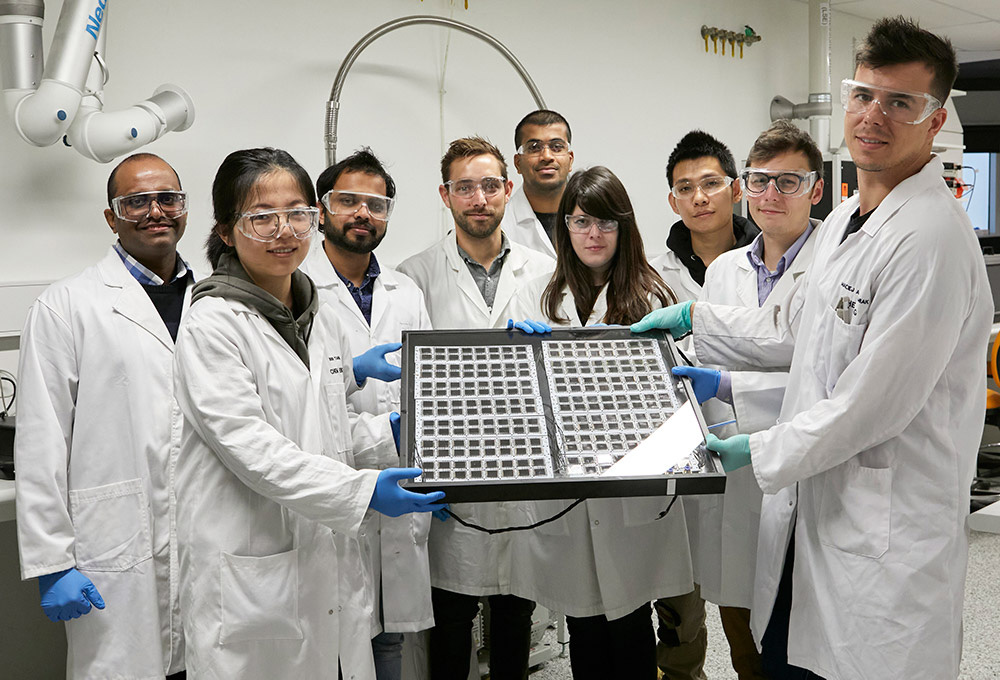
Platform 2.4 integrated advanced robotics, automation, and machine learning into materials discovery, placing Australia at the cutting edge of global material science research. The High-Throughput Materials Discovery facility, housed at the Melbourne Centre for Nanofabrication, is a pioneering research platform designed to dramatically accelerate the discovery and testing of new materials. By automating the fabrication and testing of up to 2,000 new material samples each week, this facility operates at speeds and accuracy levels far beyond traditional human-led research methods. Initially focused on solar cell materials, particularly perovskites, the facility’s capabilities extend to research in solar fuels, battery materials, and beyond.
The platform made significant strides in 2023, highlighted by a proof-of-principle publication demonstrating the successful integration of robotic solar cell fabrication with machine learning optimization. This work led to the discovery of a new perovskite composition that outperformed previous human-optimized samples. The system’s hardware was rigorously tested in Switzerland before being installed at the Melbourne Centre for Nanofabrication, where the final assembly and optimisation are now nearing completion. In parallel, machine learning-driven studies on perovskite film fabrication resulted in a highly optimized material that achieved solar cell efficiencies of up to 16.9%. This milestone not only showcases the power of combining automation with machine learning but also underscores the platform’s potential to accelerate the development of next-generation materials in solar energy and other fields. As the system becomes fully operational, it is poised to continue pushing the boundaries of material discovery and energy solutions.
You can learn more about this platform and it’s research here:
https://ar2023.excitonscience.com/content/News/From-years-to-weeks.html
Excitonic Systems for Security, Lighting and Sensing
Platform 3.1 – Excitonic Sensors
Platform Champion: Associate Professor Wallace Wong
Deputy Platform Champion: Dr Greg Barbante
Outcome summary
The risk of terror attacks has prompted scientists to invest time and effort in developing smart materials to detect chemical and biological warfare agents. The field of sensors for these materials is extremely broad, encompassing very simple paper-based test strips for liquid chemicals, to large high-tech instruments for detecting biological agents. In partnership with the Defence Science and Technology (DST) Group, the Centre has been in a unique position to develop portable and robust chemical sensors with high sensitivity and specificity.
The goal of Platform 3.1 was to develop emerging emissive materials, robust strategies, and analysis procedures for miniaturising and simplifying luminescence chemical sensors with lower economic cost than existing large laboratory instruments; higher sensitivity than ordinary paper tests; and better selectivity than electrochemical detectors.
In this collaborative program, the Centre developed several novel fluorescence sensing materials including organic fluorophores for biological sensing as well as metal halide perovskites for halide sensing. In parallel, capability to analyse and evaluate sensor probes in solution and solid state was established. The program also drove the development of a compact fluorescence-based aerosol sensor device. The device was used in two applications. The first is the quantification of fluorescein as a simulant in aerosol chemical penetration tests. The second is the development of the sensor to detect biological agents by integration of a loop-mediated isothermal amplification assay into the sensor.
Research Highlights
- “A Molecular Chameleon for Mapping Subcellular Polarity in an Unfolded Proteome Environment”, T. C. Owyong, P. Subedi, J. Deng, E. Hinde, J. J. Paxman, J. M. White, W. Chen, B. Heras, W. W. H. Wong, Y. Hong; Angewandte Chemie International Edition 59, 10129–10135 (2020).
- “Detection of Halomethanes Using Cesium Lead Halide Perovskite Nanocrystals”, W. Yin, H. Li, A. S. R. Chesman, B. Tadgell, A. D. Scully, M. Wang, W. Huang, C. R. McNeill, W. W. H. Wong, N. V. Medhekar, P. Mulvaney, J. J. Jasieniak; ACS Nano 15, 1454–1464 (2021).
- “Macroporous Perovskite Nanocrystal Composites for Ultrasensitive Copper Ion Detection”, H. Li, W. Yin, C. K. Ng, R. Huang, S. Du, M. Sharma, B. Li, G. Yuan, M. Michalska, S. K. Matta, Y. Chen, N. Chandrasekaran, S. Russo, N. R. Cameron, A. M. Funston, J. J. Jasieniak; Nanoscale 14, 11953–11962 (2022).
- “Amplifying the Negative Solvatochromism of Pyridinium Phenolates via Fluorene Conjugation”, I. Zharinova, N. Saker Neto, W. W. H. Wong; Chemistry of Materials 36, 286–299 (2024).
- “Optimization of Reverse Transcription Loop-Mediated Isothermal Amplification for In Situ Detection of SARS-CoV-2 in a Micro-Air-Filtration Device Format”, J. Fry, J. Y. H. Lee, J. L. McAuley, J. L. Porter, I. R. Monk, S. T. Martin, D. J. Collins, G. J. Barbante, N. J. Fitzgerald, T. P. Stinear; ACS Omega 9, 40832–40840 (2024).


Platform 3.2 – Banknote Security
Platform Champion: Dr. Timothy James
Deputy Platform Champion: Professor Paul Mulvaney
Outcome summary
Australia leads the way in the development of polymer banknote technology. With counterfeiters gaining improved access to lower cost technologies, more sophisticated forgeries are possible. To maintain confidence in the currency, development of new security features is needed. The most important security features that act as a first line of defence in identifying counterfeits are overt features. These features must be straightforward and intuitive for the public or cash handler to use in helping them identify the banknote is genuine. The security features must be durable, printable, difficult to replicate, and cost-effective.
Platform 3.2 was focused on the development of new overt optical security features for Australian polymer banknotes. The overarching goal was to produce banknote security features that are difficult to counterfeit and simple to verify. Such security features must be able to meet multiple requirements such as cost effectiveness, efficacy, durability, printability, sustainability and public safety.
The Centre pioneered work on two materials for further evaluation by the bank. The first project focussed on magnetic nanoparticle based inks (MNI) and led to development of an overt security ink using magnetically aligned nanoparticles to produce bright optical effects. The project involved materials synthesis, novel characterisation methods such as magneto-optical spectroscopy and synchrotron based SAXS studies, as well as exploration of scale-up processes and ink formulation.
A second project involved the exploration of novel NIR absorbing and emitting inks. The identification and fabrication of materials suitable for banknotes was successfully carried out and is being further developed in-house by the RBA.
Research Highlights
- “Size, Diffusion, and Sedimentation of Gold Nanorods”, S. Seibt, J. Pearson, R. Nixon-Luke, H. Zhang, P. R. Lang, G. Bryant, H. Cölfen, P. Mulvaney; The Journal of Physical Chemistry C 127, 22336–22346 (2023).
- “Room Temperature Bias-Selectable, Dual-Band Infrared Detectors Based on Lead Sulfide Colloidal Quantum Dots and Black Phosphorus”, S. Wang, A. Ashokan, S. Balendhran, W. Yan, B. C. Johnson, A. Peruzzo, K. B. Crozier, P. Mulvaney, J. Bullock; ACS Nano 17, 11771–11782 (2023).
- “Scalable and Consistent Fabrication of Plasmonic Colors via Nanoimprint Lithography”, M. F. S. Shahidan, J. Song, T. D. James, P. Mulvaney, A. Roberts; SPIE Micro+ Nano Materials, Devices, and Applications 2019, 11201, 98–99 (2019).
- “Multilevel Spherical Photonic Crystals with Controllable Structures and Structure‐Enhanced Functionalities”, J. Wang, H. Le‐The, L. Shui, J. G. Bomer, M. Jin, G. Zhou, P. Mulvaney, P. Pinkse, A. van den Berg, L. I. Segerink, J. C. T. Eijkel; Advanced Optical Materials 8, 1902164 (2020).
- “Concealed Structural Colors Uncovered by Light Scattering”, E. M. Akinoglu, J. Song, C. Kinnear, Y. Xue, H. Zhang, A. Roberts, J. Köhler, P. Mulvaney; Advanced Optical Materials 8 (22), 2001307 (2020).
- “Size and Composition Control of Magnetic Nanoparticles”, D. Wen, T. Ralph, J. Han, S. Bradley, M. J. Giansiracusa, V. Mitchell, C. Boskovic, N. Kirkwood; The Journal of Physical Chemistry C 127 (19), 9164–9172 (2023).
Platform 3.3 – Light emitting Devices
Platform Champion: Dr. James Hutchison
Deputy Platform Champion: Associate Professor Girish Lakhwani
Outcome summary
Light emitting devices are ubiquitous in modern life, critical for lighting, screen technology, and communication. However many challenges remain, one of the biggest being the lack of stable, bright blue-emitting materials, which has consequences for imaging in real colour (see figure). Platform 3.3 focused on delivering solutions to future lighting and display technologies by developing materials and devices beyond current efficiency, brightness and stability limits with spectral coverage from the UV to visible and IR range. New (blue) light-emitting materials were developed with a focus on low-power visible and infrared detection. Materials which can re-harvest energy lost to dark states, so-called thermally-activated delayed fluorescence (TADF) materials, were also developed. Organic materials for a new generation of low-power consumption lasers, so-called polariton lasers, were developed. Finally, excitonic materials with high sensitivity to environmental changes were also examined with a view towards chemical sensing.
Figure: (left) The challenge of imaging in real colour when blue-emitting materials in display technologies face challenges of brightness and stability. (right) Exciton developed blue and purple Quantum Dot (Q-dot) materials and incorporated them into devices (Q-LEDs).
Significant outcomes:
- Exciton developed blue and purple Quantum Dot (Q-dot) materials and incorporated them into devices (Q-LEDs)
- Novel TADF molecules were developed that do not undergo deleterious aggregation, and combined with optical cavities to enhance the TADF process by 33% in an LED device
- A range of organic (perylene) dyes with bulky substituents were fabricated that could incorporated into films without deleterious aggregation effects, and polariton lasing demonstrated
Research Highlights
- “Molecularly Isolated Perylene Diimides Enable Both Strong Exciton–Photon Coupling and High Photoluminescence Quantum Yield”, Sabatini, R. P.; Zhang, B.; Gupta, A.; Leoni, J.; Wong, W. W. H.; Lakhwani, G.; Journal of Materials Chemistry C 7, 2954 (2019).
- “Organic Polariton Lasing with Molecularly Isolated Perylene Diimides”, Sabatini, R. P.; Maasoumi, F.; Prasad, S. K. K.; Zhang, B.; Clark, C.; Schmidt, T. W.; Wong, W. W. H.; Lakhwani, G.; Applied Physics Letters 117, 041103 (2020).
- “Multi-Resonance TADF in Optical Cavities: Suppressing Excimer Emission Through Efficient Energy Transfer to the Lower Polariton States”, Cho, I.; Kendrick, W. J.; Stuart, A. N.; Ramkissoon, P.; Ghiggino, K. P.; Wong, W. W. H.; Lakhwani, G.; Journal of Materials Chemistry C 11, 14448 (2023).
- “Ligand Memory Effect in Purple Quantum Dot LEDs”, Blauth, C.; Mulvaney, P.; Hirai, T.; Applied Physics Letters 115, 173505 (2019).